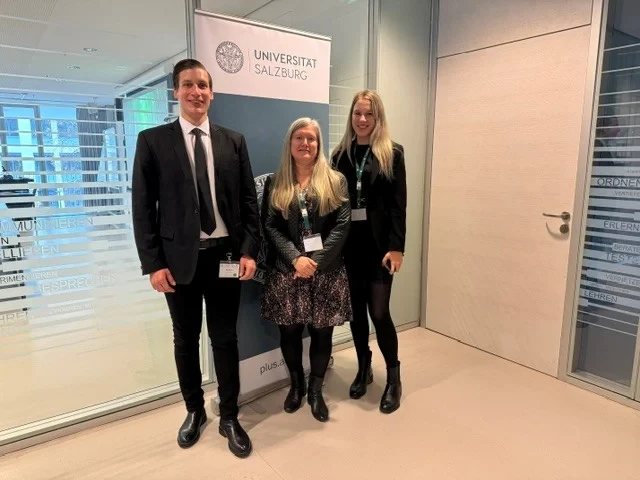

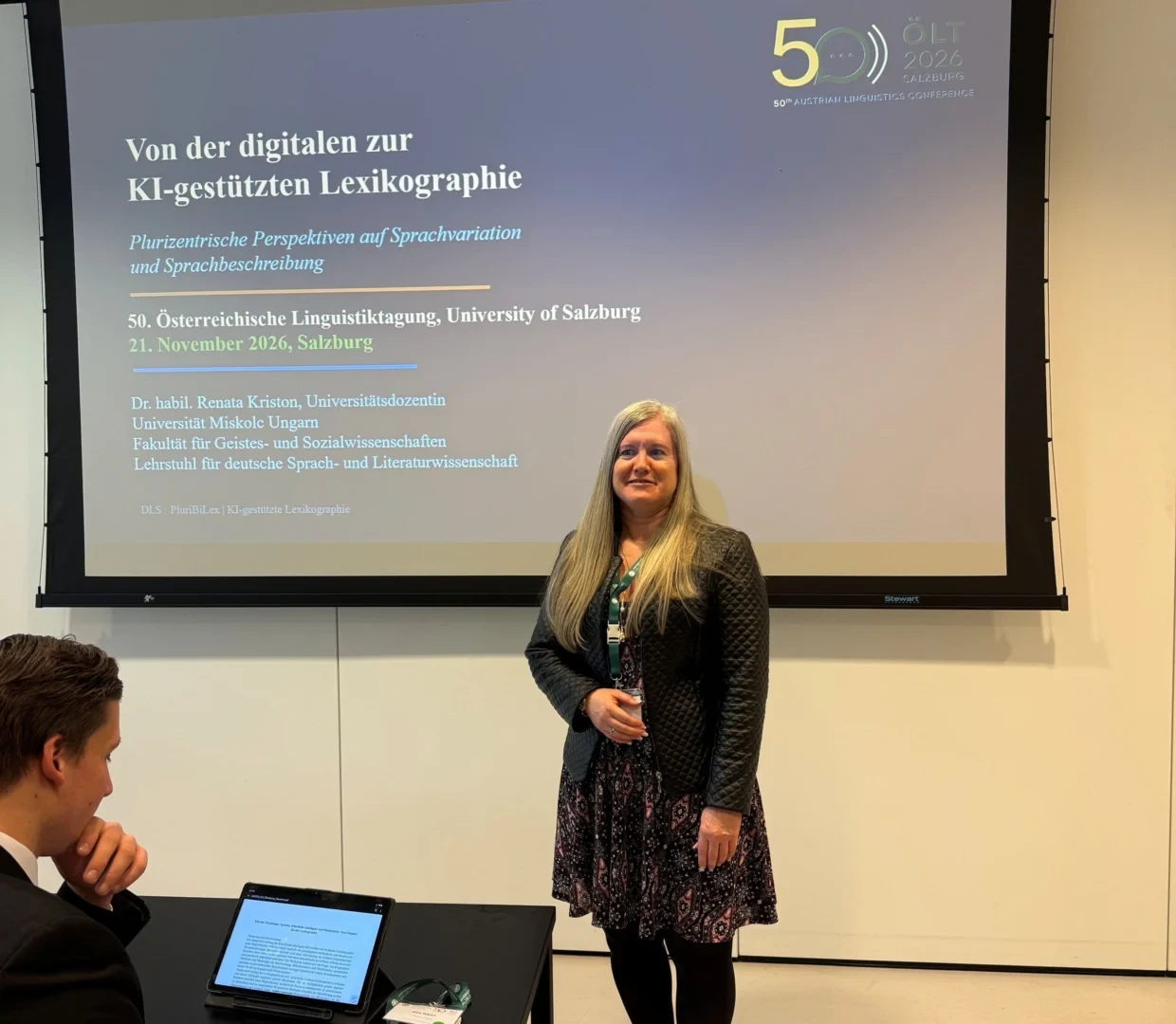
On November 20–21, the University of Salzburg hosted the 50th Österreichische Linguistiktagung (ÖLT) conference, at which the University of Miskolc presented its digital lexicography project, called Digital Lexicographic Space (DLS), which is based on artificial intelligence.
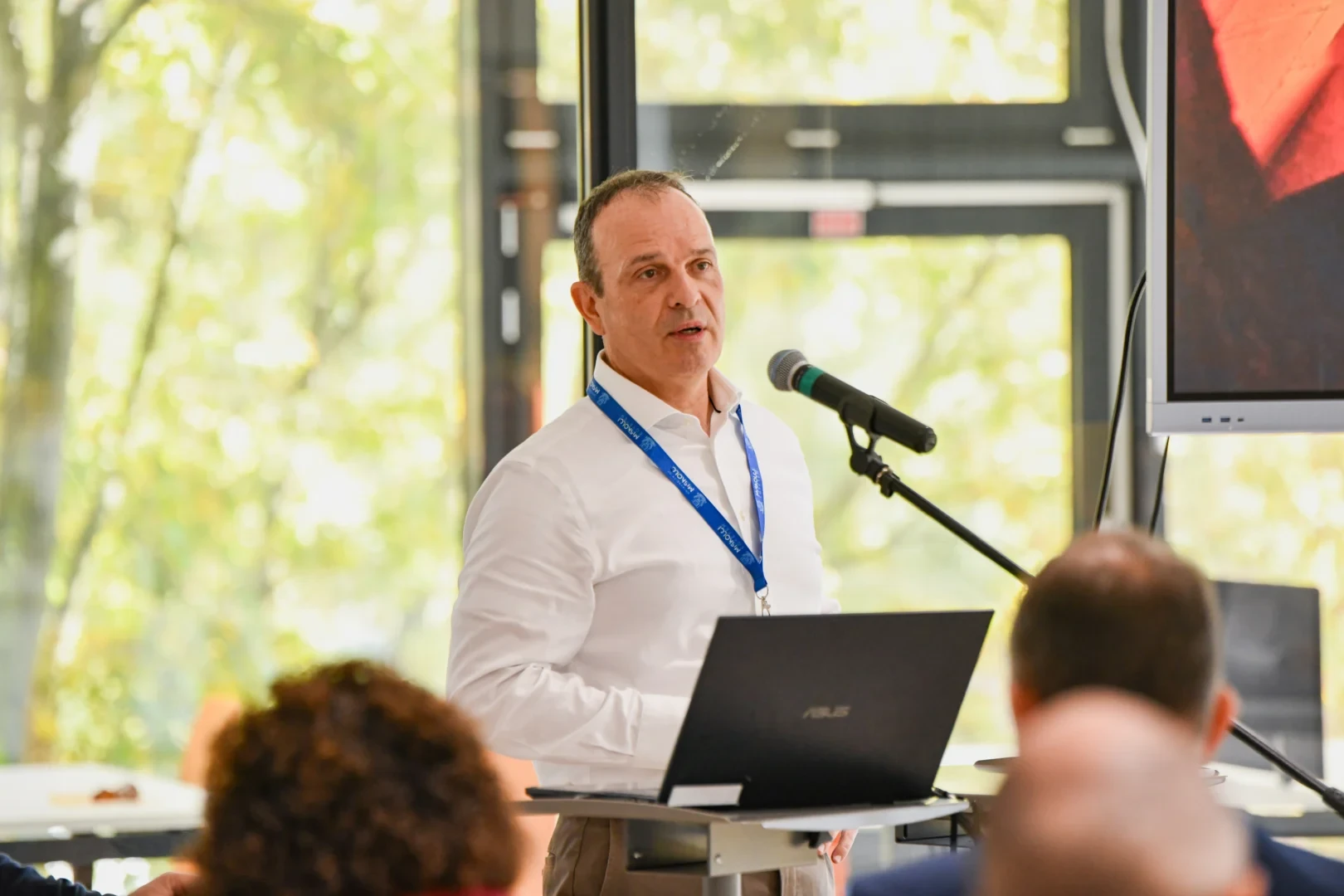
At the conference, the workshop titled “Language, Artificial Intelligence, and Pluricentrism: New Impulses for Lexicography” (Sprache, Künstliche Intelligenz und Plurizentrik: Neue Impulse für die Lexikographie) was led by Dr. habil. Renáta Kriston, Associate Dean for Research and International Affairs at the Faculty of Humanities and Social Sciences. In her presentation, she discussed the relationship between language, artificial intelligence, and pluricentric language varieties, as well as the scientific and practical applications of artificial intelligence in lexicography.
The presentation, which focused on research and development perspectives, was linked to one of the workshop’s key topics: the Digital Lexicographic Space (DLS), a digital lexicography project based on artificial intelligence. The initiative has also attracted the interest of several international research institutions. The Austrian Academy of Sciences, the ELTE Research Center for Linguistics, and the Jožef Stefan Institute in Slovenia have all expressed their intention to join the project, which represents an important step toward establishing international research collaboration.
In the conference’s section showcasing young researchers, two of Renáta Kriston’s doctoral students also gave presentations: Illés Nagy, a teaching assistant at the Institute of Modern Philology, and Fanni Sedlák, a student at the ELTE Doctoral School of Linguistics, presented their research findings.
Participation in the conference was supported by a research grant from the Austrian-Hungarian Action Foundation.